













 8 min
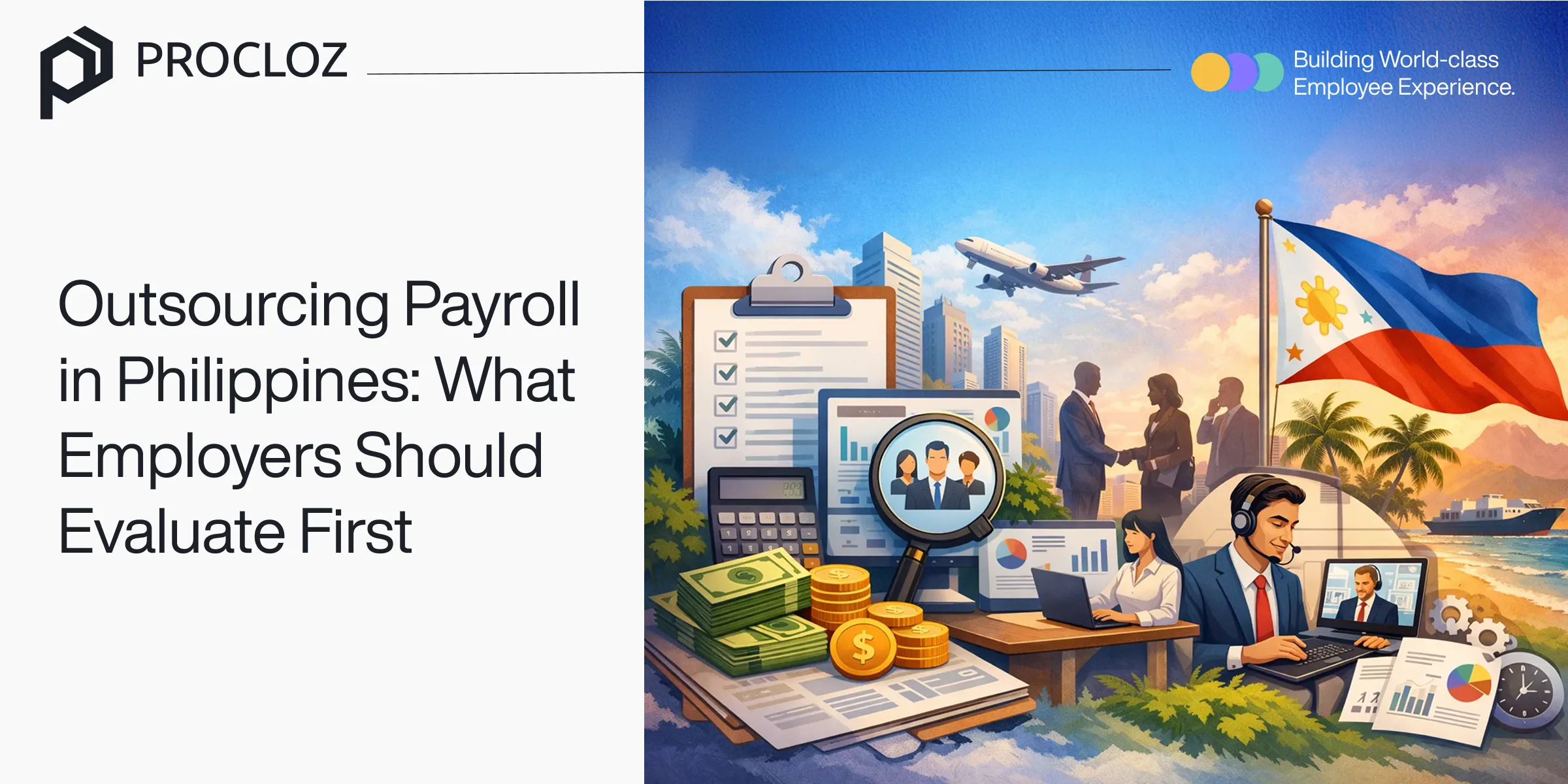
8 min In the Philippines, payroll is more complicated than just calculating an employee’s salary. There are multiple government agencies to deal with, mandatory employee contributions, and strict filing deadlines.
To address payroll complexity, companies use payroll services in the Philippines. Outsourcing payroll tasks, however, does not relieve the employer of its compliance liability. Through the outsourcing process, the employer is still legally responsible for the accuracy, timeliness, and adequacy of all the records.
There are several areas of compliance to consider, and this will depend on the outsourcing provider you choose.
What Regulatory Obligations Must Philippines Payroll Services Cover?
In the Philippines, compliance with payroll is a multi-agency process, and these include the:
- Department of Labor and Employment (DOLE): compliance with the standards and wages of labor.
- Bureau of Internal Revenue (BIR): concerns with tax withholdings and remittances.
- Social Security System (SSS): legally required contributions.
- PhilHealth: contributions for health insurance.
- Pag-IBIG Fund: contributions to the housing fund.
Employers (and thus payroll services) have a legal obligation to submit (and thus pay) these contributions and taxes on time.
Filings must be done accurately and on time by a trustworthy provider of payroll services in the Philippines. Oversights can result in investigations for compliance and penalties.
Real-life situations have demonstrated that BIR withholding tax filings are incorrect and require revised returns. This results in extra administrative work.
Why Does Local Expertise Matter in Payroll Outsourcing?
Enforcement and detail characterize the Philippine labor laws. Compliance is required for V. Wage rates, holiday pay, and overtime payment are part of the laws in effect.
Rank-and-file employees get a 13th-month pay as a requirement of the Presidential Decree No. 851.
A payroll provider lacking local expertise may incorrectly apply the regional wage and holiday pay rules. This increases the risk of being cited for noncompliance.
Certainly, experienced payroll services providers in the Philippines who have local expertise in payroll outsourcing have the knowledge to ensure that all payroll activities are in compliance with the rules and standards set forth by DOLE and local standards.
How Should Employers Examine Data Precision and Controls?
Payroll includes sensitive information such as employee salaries, tax id’s, and records of government contributions.
Errors in employee classification or contribution can spell multiple issues with compliance.
Employers should look into and evaluate:
- The processes and tools used for validating accuracy.
- Access controls and permissions within the system.
- The secure procedures around the storage of sensitive information.
- Availability and storage of audit trails.
Mistakes in reporting to government agencies like the SSS and PhilHealth can lead to corrective submissions and explanations to employees. Philippine payroll services can reduce these risks by incorporating review and approval processes.
Employers with several locations, like those who provide payroll services in Australia, need to have in place compliance controls for each country. Payroll compliance in the Philippines and in Australia is different. Hence, the system will require different configurations.
How Reliable Are Reporting and Filing Processes?
Reporting and filing documents that are required is a must.
The filing of BIR withholding taxes is done within the specified timeframes.
Contributions to the SSS and PhilHealth have to be submitted within the specified times.
While examining payroll services in the Philippines, employers should consider:
- How are reminders for deadlines handled?
- What are the escalation steps for missed filings?
- Is there assistance with documentation for government inquiries?
When filings are submitted late, there are often penalties, and sometimes the filings are interest-bearing. While convenience is appreciated, reliability is more important.
Will the Service Adjust to an Expanding Workforce?
As businesses expand, payroll requirements will change.
What may begin as a small team may soon evolve to include several departments. Changes to a team’s composition may impact:
- Total contributions.
- Leave tracking.
- Compliance reporting.
Providers of payroll outsourcing Philippines need to show that they have the ability to scale. They should be able to accommodate growth in employee numbers, changes in policies, and the need for different types of reporting without affecting payroll cycles.
An employer with a presence in several countries, including those that manage payroll in Australia, usually needs the same reporting requirements for all countries, even if there are different requirements for each country.
The best Philippines payroll services should be able to manage these changes.
How Should Employers Approach Risk Management and Accountability?
Outsourcing does not change employer liability. It does not eliminate legal responsibility, only operational responsibility.
Employers must verify:
- Service level agreements are precise.
- Processes for the resolution of errors are defined.
- There is audit or compliance review support.
Even if payroll is outsourced, inaccurate filings with DOLE or BIR can result in investigations.
Philippine payroll services that are structured must have documented compliance and corrective action processes to minimize risk.
What Should Employers Do Before Choosing a Philippines Payroll Provider?
Outsourcing payroll should be viewed as a strategic decision.
Employers should:
- Check compliance coverage with all regulatory bodies.
- Identify controls and reportable processes in the system.
- Determine if the system can be scaled and if there is local know-how.
- Evaluate the extent of audit support and documentation.
Procloz assists organizations in having a stable payroll in Philippines with organized compliance checks, controlled access for payroll data, and scalable process engines.
If you are thinking of your company outsourcing payroll in the Philippines, it’s best to identify if and how prepared you are when it comes to compliance.
Speak to Procloz about developing payroll processes that are precise, compliant, and ready to scale with your business.
Frequently Asked Questions (FAQs)
1. Is payroll outsourcing allowed in the Philippines?
Yes. Employers can outsource payroll processing, but they remain legally responsible for compliance with DOLE, BIR, SSS, PhilHealth, and Pag-IBIG regulations.
2. What government agencies are involved in Philippine payroll compliance?
Payroll in the Philippines involves DOLE for labor standards, BIR for taxes, SSS for social security, PhilHealth for health insurance, and Pag-IBIG for housing contributions.
3. Does outsourcing payroll remove employer liability?
No. Even when using Philippines payroll services, the employer remains accountable for accurate filings, correct deductions, and timely remittances.
4. What are common payroll compliance risks in the Philippines?
Common risks include incorrect 13th-month pay calculations, late BIR remittances, inaccurate SSS contributions, and missed reporting deadlines.
5. How should employers evaluate a Philippines payroll provider?
Employers should assess regulatory coverage, local expertise, data controls, reporting reliability, audit support, and scalability before outsourcing.