










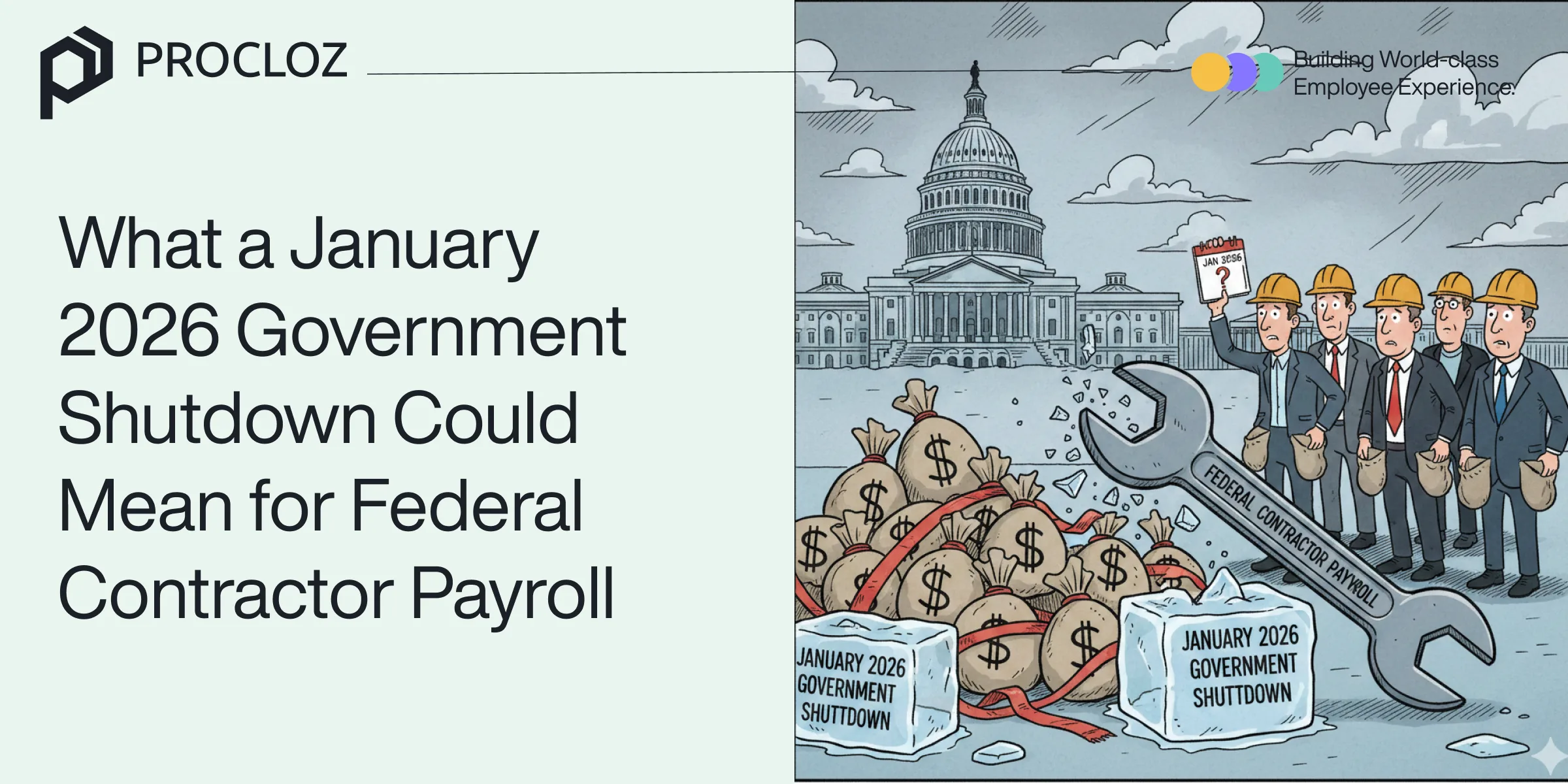

A government shutdown begins with uncertainty and not paycheck failures. Funding paused, contract officers went silent, and agencies issued stop-work orders. Meanwhile, payroll teams are left wondering, “What now?” Now this is where contractor payroll services come in, since shutdown risk is more operational than political for federal contractors. For active contracts disrupted by funding lapses, payroll decisions still must be made in accordance with federal laws concerning labor, wages, and the continuity of benefits. And if this concerns you, then this blog will guide you through what federal contractors must plan before business interruption turns into liability.
How Does Government Shutdown Affect Payroll Consistency?
When a shutdown happens, some contracts get paused immediately, while others are allowed to continue based on funding status and the agency’s choice. Shutdowns also interrupt any federal activities marked as “non-excepted” and delay payments, according to the Congressional Research Service. This may raise instant payroll questions for contractors:
- Should employees be dismissed (without pay) or reassigned?
- Does the contract concern wage liabilities?
- How to track timesheets when the employees aren’t on-site?
Organized contractor payroll services help organizations to smoothly differentiate between billable and non-billable labor, which helps them see exactly how much the shutdown is costing them.
What is the Difference Between Furlough and Leave for Contractors?
There are specific shutdown guidelines for federal workers, which do not cover private contractors. Federal employees follow rules defined by the U.S. Office of Personnel Management. Contractors, however, must consider employment contracts, their union rules, or federal labor laws. Misclassifying workers during a shutdown can also lead to wage claims and contract breaches. For instance, during a shutdown in 2019, some companies were delayed in getting their payments. Which forced them to temporarily furlough their employees or reassign them to other duties, which the government was willing to pay for. Clear classification decisions with documentation and in compliance with the terms of employment are necessary.
How Should Timekeeping and Cost Allocation Be Managed?
Labor tracking becomes tricky when contracts stop. Employees may:
- Be reclassified to other funded contracts.
- Perform indirect management functions.
- Put in unpaid status under established rules.
How you spend your time during a shutdown can lead to audit risk later. Federal contract audits focus on cost separation and labor records. Maintaining precise timekeeping records ensures:
- Accurate invoicing once funding resumes.
- Clear differences between allowable vs. non-allowable costs.
- Defensible documentation in future reviews.
At a minimum, today’s contractor payroll service companies must have the ability to reclassify labor codes in real time so they avoid backlogged reclassifications.
What Happens to Benefits and Deductions in a Shutdown?
Payroll doesn’t stop when funding does. Deductions for health insurance, retirement, and so on, along with mandatory deductions, still must happen correctly. The Department of Labor requires employers to follow the federal wage and hour laws whether they have a contract or not. If a worker continues to work, then that worker should be paid in accordance with the related wage laws. If not possible, then decisions on the continuation of benefits should be in line with corporate policy and employment contracts. Some contractors extended health coverage in previous shutdowns when pay was interrupted, which then posed big issues of reconciliation once funding returned. That’s where trustworthy contractor payroll outsourcing services USA
ensure that all benefit deductions show compliance and trackability.
What Are the Compliance and Documentation Dangers for Contractors to Monitor?
It is more common for audits to be delayed when machines are offline during shutdowns than for them to not occur at all. Contractors should maintain:
- Detailed payroll status logs.
- Written furlough or reassignment documentation.
- Timekeeping records reflecting funding changes.
- Internal policy communications.
Payroll data privacy has to be maintained, despite the operational discontinuity control by the information system being essential for shutdown activities with consequences on pay. Global companies may even already have access to global payroll services or temporary employer of record services for international teams. But federal contract payroll has its own documentation risk, which must be addressed publicly. Strong internal controls and automated payroll compliance workflows help to limit manual errors during these times of disruption.
What Can Federal Contractors Do to Prepare for a Shutdown?
Preparation for a shutdown is not about predicting but about preserving payroll stability. Key readiness steps include:
- Checking for furlough clauses in employment contracts.
- Mapping the funded vs. non-funded exposure of contracts.
- Validating benefit continuation policies.
- Payroll system flexibility checks for reclassification.
Some contractors consider structured incidence, such as backup processing units or an EOR solution, for maintaining their workforce in isolated cases. Most importantly, it’s preparing for a shutdown by ensuring that contractor payroll services can be flexible without leaving compliance holes.
What Should Federal Contractors Do Next?
Debts do not go away during a shutdown; it amplifies them. Contractors that think of shutdown planning as a payroll compliance issue, not just a funding one, weather disruption with significantly less risk. Procloz is the solution for federal contractors that need hard-hitting contractor payroll services in a high-compliance environment. With Procloz, not only do you maintain documentation, but if there is no funding, then your payroll doesn’t suffer as a result. If your organization depends on federal contracts, the time to check payroll readiness is now, before the unknown becomes a liability. Get in touch with us today to improve your contractor payroll now.
Frequently Asked Questions (FAQs)
1. Are federal contractors required to pay employees during a government shutdown?
Federal contractors must comply with federal and state wage laws. If employees perform work, they must be paid according to applicable labor standards, even if contract funding is delayed.
2. What happens to payroll during a federal funding lapse?
Payroll obligations continue. Contractors may need to furlough, reassign, or temporarily suspend employees depending on contract status, but wage and documentation requirements remain in effect.
3. Can federal contractors furlough employees during a shutdown?
Yes, but classification must align with employment contracts and federal labor laws. Misclassification can create wage disputes or compliance risks.
4. How should contractors handle benefits during a shutdown?
Health insurance, retirement deductions, and other benefits must follow company policy and legal requirements. Contractors should clearly document any temporary changes.
5. How can contractors prepare payroll systems for a government shutdown?
By reviewing funding exposure, updating timekeeping protocols, validating benefit handling policies, and ensuring contractor payroll services can quickly adapt to contract suspensions.