













 8 min
8 min Payroll has long been viewed simply as a back-office chore: silently, and accurately. However, this mentality only works until companies start hiring employees overseas, working remotely, or growing into other regions.
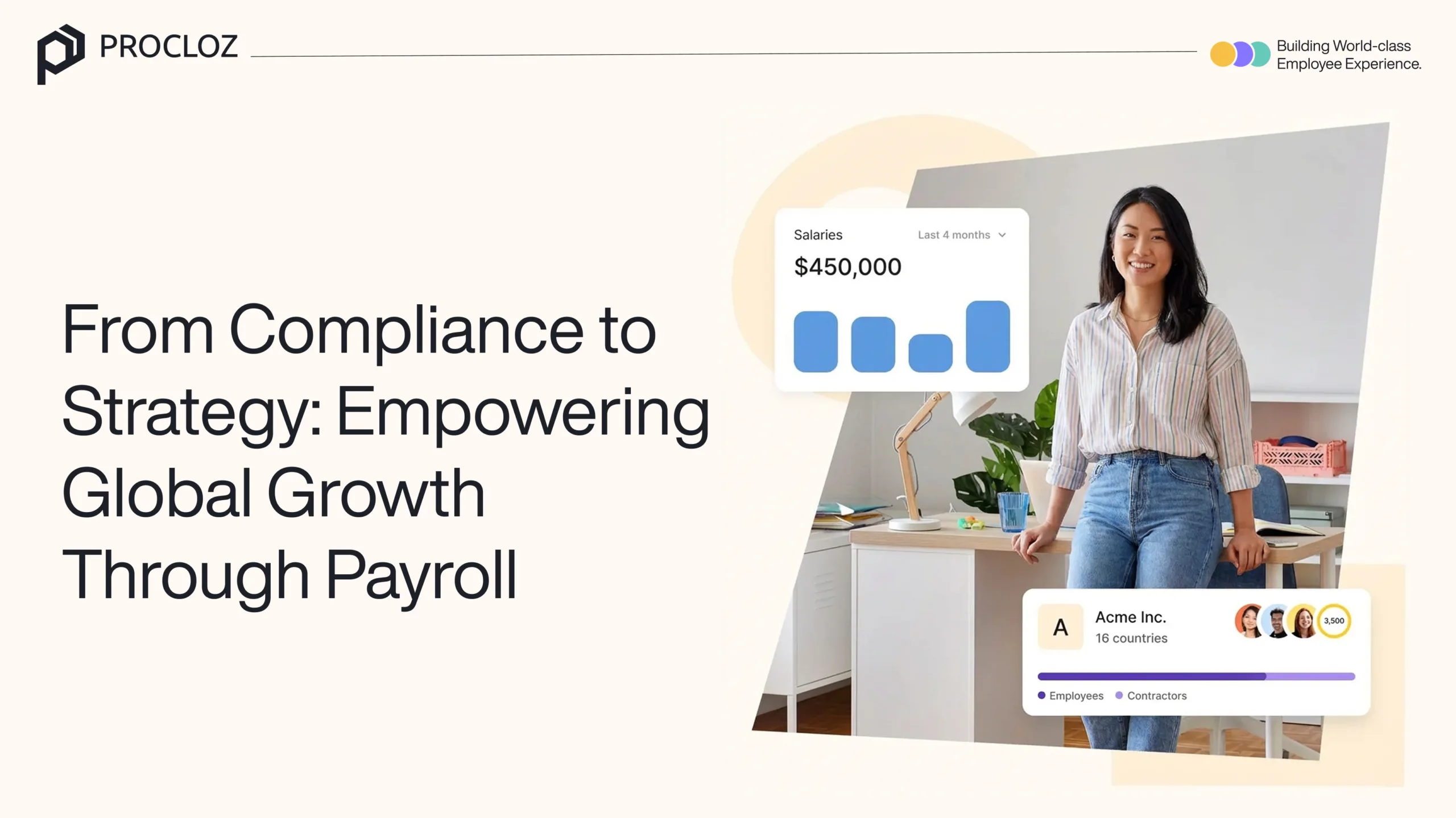
At this stage, payroll ceases to be a job and transforms into infrastructure. A well-designed global payroll strategy allows companies to transform payroll from being a reactionary instrument into a critical driver of informed decision-making, spending, and productivity management, and long-term growth opportunities.
This blog discusses how payroll shifts from compliance to strategy and why it matters.
Why Is Payroll No Longer Just A Transactional Function?
Legacy payroll is about wages, taxes, and filings. While accurate information is a must, with global operations come added layers of complexity that no amount of manual work or disparate systems can manage.
With various jurisdictions, currencies, employment types, and reporting standards, payroll must work closely with HR, finance, and leadership. Without a unified global payroll strategy, organisations deal with data silos and lag time for insights, as well as increased compliance risk.
Payroll has never been just about paying people the right amount. The point is to see the workers whose payments lie behind those pipes.
How Can Payroll Information Influence Making Better Workforce Decisions?
Employment data is the most dependable labor-market data available. It represents the real headcount, cost of compensation, employment situation, and geography-based costs.
Structured and accessible payroll data allows leaders to:
- Assess workforce distribution.
- Compare compensation trends by region.
- Evaluate hiring costs versus productivity.
Wages and benefits are a big part of employer costs as well (report by the U.S. Bureau of Labor Statistics), further underscoring the role payroll data has in workforce planning.
This is where payroll transitions from reporting to strategic information.
Why Is Compliance the Foundation of Any Global Payroll Strategy?
There is no such thing as strategic payroll without compliance. This matters because wage laws, tax obligations, and filing requirements differ from jurisdiction to jurisdiction, and mistakes can have financial and reputational repercussions.
U.S. employers with international operations continue to be subject to laws of local labor and tax jurisdictions with respect to payroll reporting. As noted in this posting, the U.S. Department of Labor emphasizes that employers are responsible for compliance with the wage and hour laws regardless of how their workforce might be arranged.
A robust global payroll strategy avoids bolt-on compliance just-in-time for the end of the week.
What Strategic Resolutions Does Modern Payroll Function Deliver?
A mature payroll operation delivers value well beyond processing:
- Consistent visibility of labor costs across regions.
- More rapid expansion into new markets with less payroll exposure.
- Minimized audit risk and no surprise of being found noncompliant.
- More closely merged HR and finance functions.
- Higher executive trust in workforce data.
It’s hard to get these results without organized systems and solid ownership.
How Does Payroll Connect Compliance to Business Strategy?
| Payroll Capability | Compliance Impact | Strategic Value |
| Accurate calculations | Prevents wage and tax violations | Builds organizational trust |
| Centralized payroll data | Consistent statutory reporting | Enables workforce analysis |
| Country-specific rules | Meets local labor laws | Supports scalable hiring |
| Secure data controls | Protects sensitive records | Reduces operational risk |
| Executive reporting | Audit readiness | Informs leadership decisions |
This connection is what distinguishes transactional payroll from strategic payroll.
How Does Payroll Help With Cost Visibility and Planning?
One of the biggest recurring business expenses is payroll. As payroll data is pushed into budgeting and forecasting, finance teams benefit from better visibility into cash flow, regional spend, and projected labor costs.
Global payroll services users also often appreciate standard reporting that matches payroll costs with financial planning cycles, making it less likely for surprises to hit and forecasts to be revised.
How Does Payroll Drive Sustainable Global Expansion?
Growth breaks down when working systems don’t scale. Payroll is frequently one of the initial pressure points.
Organizations that are expanding into new territories must juggle between hiring speed, local compliance, and cost control. It’s no wonder that a lot of companies turn to employer of record services in order set up compliant payroll structures fast, and keep on keeping on.
A good global payroll strategy prevents expansion from outpacing payroll readiness.
Why Do Safety and Privacy in Payroll Strategy Matter?
Payroll systems hold the most confidential business information of all: employee personal data. Safeguarding this information is not only a legal duty, but it also forms part of the day-to-day operational requirement.
Their advice supported keeping good control over all of your personal information, including payroll data, in order to protect against misuse and breaches.
Best-in-class payroll data security and payroll data privacy are critical cornerstones of any large-scale payroll approach.
How Can Procloz Help Companies Move From Payroll Compliance to Payroll Strategy?
A strategic payroll function requires more than software. It needs structure, visibility, and alignment of HR and finance
Procloz provides the means for enterprises to design and implement a compliant, intelligent global payroll strategy. From global hiring solutions to executive visibility, Procloz makes payroll a business driver, not a bottleneck.
If your payroll needs to support where your company is headed, then Procloz can help you lay the groundwork to get there.
Frequently Asked Questions (FAQs)
1. What is a global payroll strategy?
A global payroll strategy defines how payroll supports compliance, workforce insights, financial planning, and expansion across countries rather than functioning as a standalone processing task.
2. Why is payroll important for global business growth?
Payroll touches hiring, costs, compliance, and employee trust. When aligned with HR and finance, it enables scalable expansion and informed decision-making.
3. How does payroll data support workforce planning?
Payroll data provides accurate visibility into headcount, compensation costs, and geographic distribution, helping leaders plan hiring and resource allocation.
4. What risks arise from treating payroll as only a compliance function?
Companies face fragmented data, delayed insights, higher error rates, and limited visibility into workforce costs, especially in multi-country operations.
5. How can companies transition from payroll compliance to payroll strategy?
By centralizing payroll data, strengthening compliance foundations, integrating with finance and HR systems, and using payroll insights to guide business decisions.